

Are cutter snap off blades made of stainless steel? This is a question that often comes up among professionals and DIY enthusiasts alike. As a supplier of cutter snap off blades, I've encountered this query numerous times, and I'm here to shed some light on the matter.
Understanding Cutter Snap Off Blades
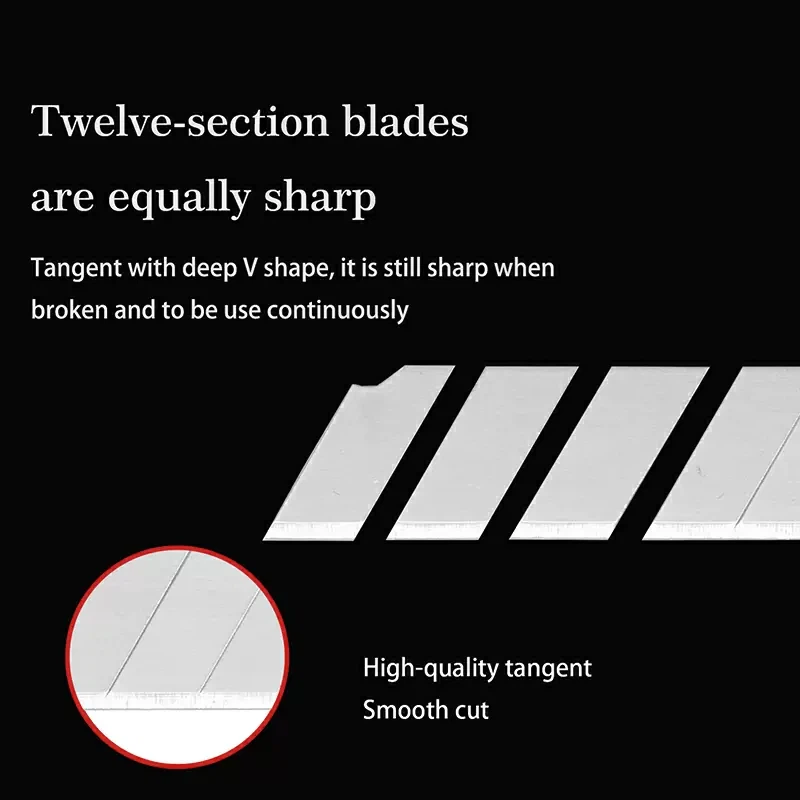
Cutter snap off blades are a type of utility blade designed for easy and quick replacement of the cutting edge. They consist of multiple segments that can be snapped off when the cutting edge becomes dull, revealing a fresh, sharp edge. These blades are commonly used in various industries, including construction, manufacturing, and crafting.
The Role of Material in Blade Performance
The material used to make a cutter snap off blade plays a crucial role in its performance. Different materials offer different properties, such as hardness, corrosion resistance, and edge retention. Stainless steel is a popular choice for many types of blades due to its excellent corrosion resistance and durability. However, not all cutter snap off blades are made of stainless steel.
Stainless Steel Blades: Pros and Cons
Stainless steel is an alloy of iron, chromium, and other elements. The chromium content in stainless steel forms a protective oxide layer on the surface of the blade, which prevents rust and corrosion. This makes stainless steel blades ideal for use in wet or humid environments.
One of the main advantages of stainless steel cutter snap off blades is their corrosion resistance. They can withstand exposure to moisture, chemicals, and other corrosive substances without rusting or deteriorating. This makes them a popular choice for applications where the blade may come into contact with water or other liquids, such as in plumbing or marine applications.
Another advantage of stainless steel blades is their durability. They are generally harder and more wear-resistant than blades made from other materials, such as carbon steel. This means that they can maintain their sharpness for longer periods of time, reducing the need for frequent blade changes.
However, stainless steel blades also have some drawbacks. One of the main disadvantages is their cost. Stainless steel is more expensive than other materials, such as carbon steel, which can make stainless steel cutter snap off blades more expensive to purchase.

Another disadvantage of stainless steel blades is their edge retention. While stainless steel blades are generally durable, they may not hold their edge as well as blades made from other materials, such as carbon steel. This means that they may need to be sharpened more frequently to maintain their cutting performance.
Other Materials Used in Cutter Snap Off Blades
In addition to stainless steel, cutter snap off blades can also be made from other materials, such as carbon steel, high-speed steel, and ceramic.
Carbon steel is a type of steel that contains carbon as the main alloying element. Carbon steel blades are known for their sharpness and edge retention. They are also relatively inexpensive compared to stainless steel blades. However, carbon steel blades are more prone to rust and corrosion than stainless steel blades, which means that they need to be properly maintained to prevent rusting.
High-speed steel is a type of steel that is designed to withstand high temperatures and high cutting speeds. High-speed steel blades are commonly used in industrial applications, such as machining and metalworking. They are known for their excellent hardness and wear resistance, as well as their ability to maintain their sharpness at high temperatures.
Ceramic blades are made from a ceramic material, such as zirconia or alumina. Ceramic blades are known for their extreme hardness and sharpness. They are also very lightweight and corrosion-resistant. However, ceramic blades are brittle and can break easily if they are subjected to too much force or impact.
Choosing the Right Material for Your Needs
When choosing a cutter snap off blade, it's important to consider your specific needs and requirements. If you need a blade that is corrosion-resistant and durable, then stainless steel may be the right choice for you. However, if you need a blade that is sharp and affordable, then carbon steel may be a better option.
Here are some factors to consider when choosing a cutter snap off blade:
- Application: Consider the type of application you will be using the blade for. If you will be using the blade in a wet or humid environment, then a stainless steel blade may be the best choice. If you will be using the blade for heavy-duty cutting, then a high-speed steel blade may be more suitable.
- Cutting Material: Consider the type of material you will be cutting. Different materials require different types of blades. For example, if you will be cutting through metal, then a high-speed steel blade may be the best choice. If you will be cutting through plastic or cardboard, then a carbon steel blade may be sufficient.
- Budget: Consider your budget when choosing a cutter snap off blade. Stainless steel blades are generally more expensive than carbon steel blades, but they offer better corrosion resistance and durability. If you are on a tight budget, then a carbon steel blade may be a more affordable option.
Our Product Range
As a supplier of cutter snap off blades, we offer a wide range of blades made from different materials to meet the needs of our customers. Our product range includes Snap Off Blade Cutter, Leather Snap Blades, and 9mm Knive Blade.
Our stainless steel blades are made from high-quality stainless steel and are designed to provide excellent corrosion resistance and durability. Our carbon steel blades are known for their sharpness and edge retention, and are a popular choice for DIY enthusiasts and professionals alike.
Contact Us for Purchasing
If you are interested in purchasing cutter snap off blades, please feel free to contact us. Our team of experts will be happy to help you choose the right blade for your needs and provide you with a competitive quote. We offer fast shipping and excellent customer service, so you can be sure that you are getting the best value for your money.
References
- ASM Handbook Volume 1: Properties and Selection: Irons, Steels, and High-Performance Alloys. ASM International.
- Fundamentals of Cutting Tool Technology. Society of Manufacturing Engineers.