

When it comes to the world of cutting tools, wallpaper cutter knives are a staple in many industries, from interior decoration to construction. A common question that often arises is whether a wallpaper cutter knife can be used on curved surfaces. As a supplier of high - quality wallpaper cutter knives, I am here to delve into this topic and provide you with in - depth insights.
The Basics of a Wallpaper Cutter Knife
Before we discuss using wallpaper cutter knives on curved surfaces, let's first understand what these knives are. A wallpaper cutter knife, also known as a utility knife, is a versatile cutting tool. It typically features a sharp blade that can be replaced or snapped off to expose a fresh, sharp edge when the existing one becomes dull.
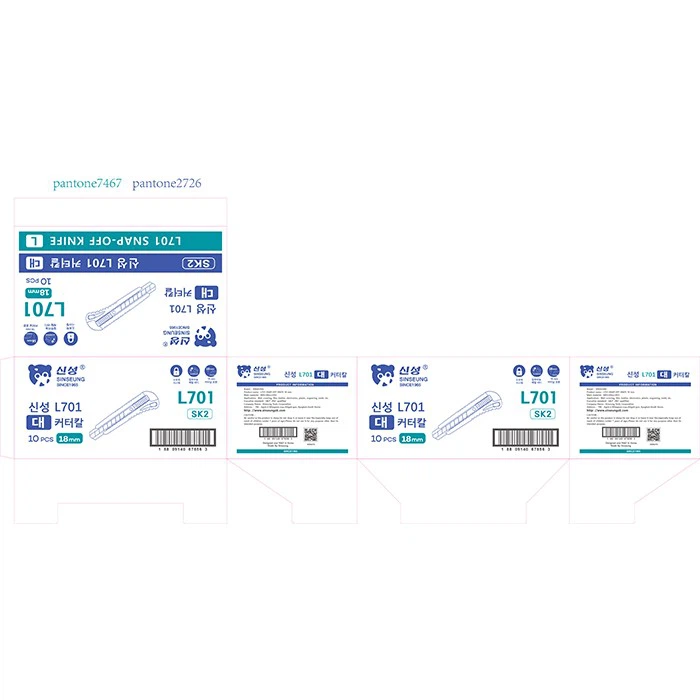
Our company offers a variety of these knives, such as the Wallpaper Knife, 18 mm Snap Off Knife, and Construction Knife. These knives are designed with different blade types and handle ergonomics to suit various cutting needs.

Challenges of Using a Wallpaper Cutter Knife on Curved Surfaces
Using a wallpaper cutter knife on curved surfaces presents several challenges. One of the main issues is maintaining an even cutting pressure. On a flat surface, it is relatively easy to apply consistent pressure along the length of the cut. However, on a curved surface, the angle of the blade changes continuously as you move along the curve. This can lead to uneven cuts, where some parts are cut too deeply while others are barely touched.
Another challenge is blade control. Curved surfaces require more precise movements to follow the contour accurately. A slight deviation in the path of the knife can result in a jagged or inaccurate cut. Moreover, the curvature of the surface may cause the blade to bind or catch, especially if the curve is too tight or the surface material is tough.
Factors Affecting the Use of Wallpaper Cutter Knives on Curved Surfaces
Blade Type
The type of blade on the wallpaper cutter knife plays a crucial role. For curved surfaces, a flexible blade is often more suitable. A flexible blade can conform to the curve to some extent, allowing for a smoother cut. Our Wallpaper Knife comes with a variety of blade options, some of which are designed to offer better flexibility for curved cutting tasks.
Surface Material
The material of the curved surface also matters. Soft materials like wallpaper or thin plastics are generally easier to cut on curved surfaces compared to hard materials such as metal or thick wood. When cutting soft materials, the blade can more easily follow the curve without much resistance. However, for hard materials, the blade may struggle to penetrate evenly, and the risk of blade damage is higher.
Curve Radius
The radius of the curve is another important factor. A larger curve radius is generally more forgiving, as the change in the blade's angle is less abrupt. In contrast, a small - radius curve requires more skill and a more precise cutting technique. For extremely tight curves, a wallpaper cutter knife may not be the most suitable tool, and alternative cutting methods may need to be considered.
Techniques for Using a Wallpaper Cutter Knife on Curved Surfaces
Marking the Curve
Before making the cut, it is essential to mark the curve accurately on the surface. This can be done using a flexible measuring tape or a template. By having a clear guide, you can better control the path of the knife and ensure a more accurate cut.
Starting the Cut
When starting the cut on a curved surface, it is advisable to make a small, shallow incision at the beginning of the curve. This helps to establish the direction of the cut and gives you better control over the knife. As you progress along the curve, apply gentle and consistent pressure, adjusting the angle of the knife as needed to follow the contour.
Multiple Passes
For thicker or tougher materials, it may be necessary to make multiple passes with the knife. Start with a shallow cut and gradually deepen it with each pass. This approach reduces the risk of over - cutting and allows for more precise control of the cut.
Applications of Using Wallpaper Cutter Knives on Curved Surfaces
Despite the challenges, there are several applications where using a wallpaper cutter knife on curved surfaces is practical. In interior decoration, for example, when installing wallpaper on curved walls or around rounded corners, a wallpaper cutter knife can be used to trim the excess wallpaper. The Wallpaper Knife is particularly well - suited for this task due to its sharp blade and ergonomic design.
In the craft industry, wallpaper cutter knives can be used to cut curved shapes from various materials such as paper, cardboard, or thin fabric. Crafters often use these knives to create intricate designs and patterns on curved surfaces.
Our Product Solutions for Curved Surface Cutting
As a supplier, we understand the needs of our customers when it comes to cutting on curved surfaces. Our 18 mm Snap Off Knife is designed with a snap - off blade feature, which allows you to quickly replace the dull part of the blade and maintain a sharp cutting edge. This is especially useful when making multiple cuts on curved surfaces, as a sharp blade ensures cleaner and more accurate cuts.
The Construction Knife in our product range is built with a sturdy handle and a high - quality blade. It can withstand the pressure required for cutting through tougher materials on curved surfaces, making it a reliable choice for construction and renovation projects.
Conclusion
In conclusion, while using a wallpaper cutter knife on curved surfaces presents challenges, it is possible with the right techniques, tools, and a bit of practice. The type of blade, surface material, and curve radius all need to be considered when attempting such cuts. Our company offers a range of high - quality wallpaper cutter knives, including the Wallpaper Knife, 18 mm Snap Off Knife, and Construction Knife, which are designed to meet different cutting needs on curved surfaces.
If you are in the market for wallpaper cutter knives for your projects, whether it's for interior decoration, construction, or crafting, we invite you to contact us for a detailed discussion. Our team of experts can provide you with professional advice and help you choose the most suitable products for your specific requirements.
References
- Wood, John. "Hand Tools for the Modern Craftsman." Craft Publishing, 2018.
- Smith, Emily. "Advanced Cutting Techniques in Interior Design." Design World Press, 2020.