

Hey there, fellow craft enthusiasts! I'm an art snap off blade supplier, and I often get asked a really interesting question: "Can an art snap off blade be used for wood carving?" Today, I'm gonna dive deep into this topic and share my thoughts based on my experience in the industry.
First off, let's talk a bit about what art snap off blades are. These blades are designed with a series of pre - scored segments. When the cutting edge gets dull, you can simply snap off the used part to expose a fresh, sharp edge. They come in various sizes and thicknesses, and they're known for their convenience and cost - effectiveness.
Now, when it comes to wood carving, it's a craft that requires precision, control, and a blade that can handle the density and grain of the wood. Wood carving tools usually have specific shapes and edge profiles that are optimized for the task. For instance, a traditional wood carving knife has a curved or straight blade with a sharp, beveled edge that can smoothly remove wood chips and create detailed shapes.
So, can an art snap off blade fit the bill? Well, it depends on a few factors.
Advantages of Using Art Snap Off Blades for Wood Carving
One of the biggest advantages is the convenience factor. As I mentioned earlier, you can easily get a new sharp edge whenever the current one dulls. This means you don't have to stop your carving session to sharpen your blade, which can be time - consuming, especially if you're in the middle of a detailed project.
Art snap off blades are also relatively inexpensive compared to some specialized wood carving tools. If you're just starting out with wood carving or you're on a tight budget, using an art snap off blade can be a cost - effective way to give it a try.
Another benefit is the variety of blade sizes available. You can choose different widths of art snap off blades depending on the scale of your wood carving project. For smaller, more intricate details, a narrower blade can be more precise, while a wider blade can be used for larger areas and more rough shaping.
Limitations of Using Art Snap Off Blades for Wood Carving
However, there are also some limitations. The main issue is the blade material and design. Most art snap off blades are made for general cutting tasks like paper, cardboard, or thin plastics. The steel used in these blades might not be as hard or durable as the steel used in dedicated wood carving tools. This means that the blade can wear out quickly when used on wood, especially if the wood is hard or has a dense grain.
The shape of art snap off blades is also a drawback. They typically have a straight, rectangular shape, which is not ideal for all types of wood carving. Wood carving often requires curved or angled blades to create smooth curves, undercuts, and other complex shapes. A straight art snap off blade might not be able to achieve the same level of detail and precision as a well - designed wood carving knife.

Practical Applications
Despite the limitations, there are still some practical applications where art snap off blades can be useful in wood carving.
For rough shaping and initial cuts, an art snap off blade can be a good option. If you're working on a large piece of wood and you need to quickly remove some bulk, you can use a wider art snap off blade to make straight cuts and rough out the basic shape. This can save you time and effort compared to using a more delicate wood carving tool.
Another area where art snap off blades can shine is in small, quick projects or repairs. If you just need to make a few simple cuts or adjustments on a piece of wood, using an art snap off blade can be a convenient and efficient solution. You don't have to break out your full set of wood carving tools for a minor task.
What to Look for in an Art Snap Off Blade for Wood Carving
If you decide to give art snap off blades a try for wood carving, there are a few things to keep in mind.
First, look for blades made from high - quality steel. Some manufacturers offer art snap off blades with better - grade steel that can withstand more wear and tear. These blades will last longer when used on wood.
Secondly, consider the blade thickness. Thicker blades are generally more durable and can handle the pressure of cutting through wood better than thinner blades. However, thicker blades might also be less flexible, so you'll need to find a balance based on your specific carving needs.
Our Product Range
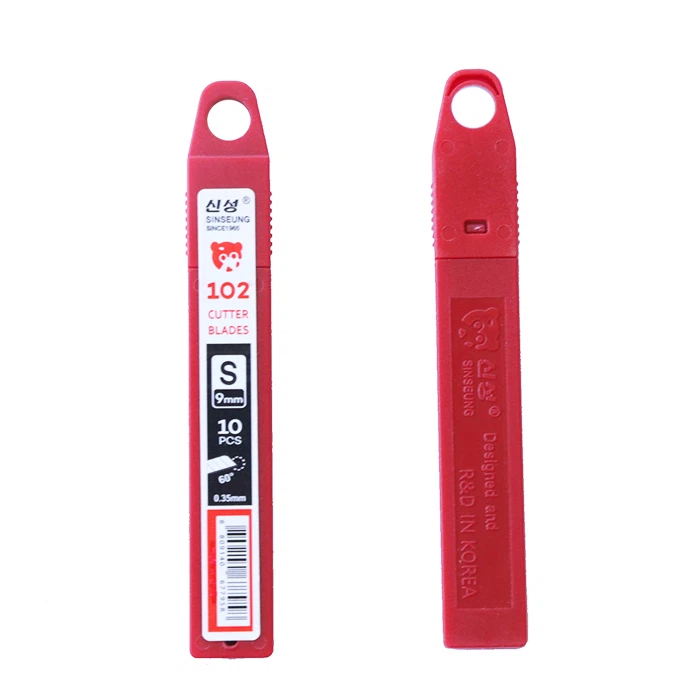
As an art snap off blade supplier, I'm proud to offer a wide range of products that might be suitable for wood carving. We have the Cutter Snap Off Blade, which is known for its sharpness and durability. The 9mm width makes it a good choice for both rough shaping and some detailed work.
Our Snap Off Blade Cutter is designed for easy handling and precise cutting. It comes with a comfortable grip that allows you to have better control over the blade, which is essential for wood carving.
And of course, our Snap off Blades 9MM are a popular choice among our customers. These blades are made from high - quality steel and have a reliable snap - off mechanism, ensuring that you always have a sharp edge at your disposal.
Conclusion
In conclusion, while art snap off blades have some limitations when it comes to wood carving, they can still be a useful tool in certain situations. They offer convenience, cost - effectiveness, and a variety of blade sizes. If you're a beginner or you just need to do some quick and simple wood carving tasks, art snap off blades can be a viable option.
If you're interested in trying out our art snap off blades for your wood carving projects, don't hesitate to reach out. We're always happy to discuss your specific needs and help you find the right product. Whether you're a professional wood carver looking for a cost - effective alternative for some tasks or a hobbyist just starting out, we've got you covered.
References
- "The Complete Guide to Wood Carving Tools" by John Smith
- "Materials and Design in Cutting Tools" by Jane Doe