

Selecting the appropriate art snap off blade for your project is a crucial decision that can significantly impact the quality and efficiency of your work. As an experienced art snap off blade supplier, I understand the challenges you may face in making this choice. In this blog post, I'll guide you through the key factors to consider when choosing the right art snap off blade, ensuring that you make an informed decision that meets your specific project requirements.
Understanding Your Project Needs
The first step in choosing the right art snap off blade is to understand the nature of your project. Different projects demand different blade characteristics. For instance, if you're working on a delicate art project that requires precise cuts, such as paper crafting or model making, you'll need a blade with a fine tip and a sharp edge. On the other hand, if you're dealing with tougher materials like vinyl or window tints, a more durable and robust blade is essential.
Blade Material and Coating
The material and coating of the blade play a vital role in its performance and longevity. High - quality art snap off blades are typically made from carbon steel or stainless steel. Carbon steel blades are known for their sharpness and are suitable for general cutting tasks. They can provide a clean cut on a variety of materials, including paper, cardboard, and thin plastics.
Stainless steel blades, on the other hand, are more resistant to corrosion and rust. This makes them ideal for projects that involve exposure to moisture or chemicals. For example, if you're working on an outdoor art installation where the blade may come into contact with rain or other environmental elements, a stainless - steel blade would be a better choice.
Some blades also come with special coatings. Titanium nitride (TiN) coating, for instance, can increase the blade's hardness and reduce friction. This results in a longer - lasting blade that can cut more smoothly through materials. When choosing a blade, consider the material you'll be cutting and the environmental conditions of your project to determine the most suitable blade material and coating.

Blade Size and Shape
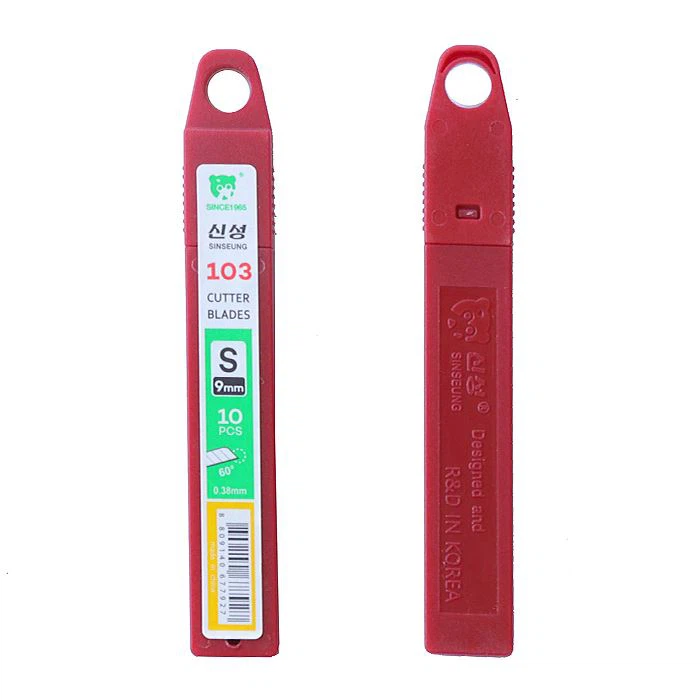
The size and shape of the art snap off blade are also important considerations. Blade sizes are usually measured in millimeters, with common sizes including 9mm, 12mm, and 18mm. A smaller blade, such as a 9mm snap off blade, is more maneuverable and is great for detailed work. It allows you to make precise cuts in tight spaces.
Larger blades, on the other hand, are more suitable for cutting through thicker materials or for covering larger areas quickly. For example, if you're cutting large sheets of cardboard or thick vinyl, a 12mm or 18mm blade may be more efficient.
The shape of the blade can also affect its performance. Some blades have a straight edge, which is ideal for making straight cuts. Others have a serrated edge, which can be useful for cutting through materials that are difficult to cut with a straight blade, such as fabric or rubber.
Snap - Off Mechanism
One of the key features of art snap off blades is their snap - off mechanism. This allows you to break off a dull section of the blade and expose a fresh, sharp edge. When choosing a snap off blade, pay attention to the ease of the snap - off process. A good snap off mechanism should be smooth and require minimal force.
Some snap off blades have a scoring line that indicates where to break the blade. This makes the snap - off process more accurate and reduces the risk of breaking the blade in the wrong place. Additionally, consider the number of break - off segments on the blade. More break - off segments mean you can use the blade for a longer time before having to replace it.
Compatibility with Your Tool
It's important to ensure that the art snap off blade you choose is compatible with your cutting tool. Different tools may have different blade holders or mechanisms, so make sure the blade fits securely into your tool. Using an incompatible blade can not only affect the performance of the tool but also pose a safety risk.
If you're using a professional - grade cutting tool, it's recommended to use blades that are specifically designed for that tool. This ensures optimal performance and reduces the likelihood of damage to the tool or the blade.
Specific Applications
Let's take a closer look at some specific applications and the type of art snap off blades that are best suited for them.
Paper Crafting
For paper crafting projects, a fine - tipped cutter snap off blade is essential. A 9mm blade made from carbon steel is often a good choice. It can make precise cuts on different types of paper, including cardstock, construction paper, and origami paper. The sharp edge of the blade ensures a clean cut without tearing the paper.
Window Tints
When working with window tints, you need a blade that can cut through the tint film smoothly without scratching the window. Snap - off blades for window tints are designed specifically for this purpose. They are usually made from high - quality stainless steel to prevent corrosion and have a sharp, fine edge that can make clean cuts on the tint film.
Vinyl Cutting
Vinyl cutting requires a durable blade that can handle the toughness of the material. A 12mm or 18mm blade made from stainless steel or a blade with a TiN coating is a good option. These blades can cut through vinyl sheets of different thicknesses, whether you're creating vinyl decals, signage, or other vinyl - based art projects.
Quality and Brand Reputation
When choosing an art snap off blade, it's important to consider the quality and brand reputation of the product. A high - quality blade may cost a bit more upfront, but it will last longer and provide better results. Look for brands that are known for their reliability and performance in the industry.
You can also read reviews from other users to get an idea of the quality of the blade. User reviews can provide valuable insights into the blade's sharpness, durability, and ease of use.
Cost - Efficiency
While quality is important, cost - efficiency is also a factor to consider. You don't want to overspend on a blade that you won't use to its full potential. Compare the prices of different blades and consider the number of break - off segments, the expected lifespan of the blade, and the quality of the material.
In some cases, it may be more cost - effective to buy a higher - quality blade that lasts longer rather than a cheaper blade that needs to be replaced frequently.
Conclusion
Choosing the right art snap off blade for your project requires careful consideration of several factors, including your project needs, blade material and coating, size and shape, snap - off mechanism, compatibility with your tool, specific applications, quality, brand reputation, and cost - efficiency. By taking the time to evaluate these factors, you can select a blade that will help you achieve the best results in your art projects.
If you're still unsure which art snap off blade is right for your project, or if you have any questions about our products, feel free to reach out to us. We're here to help you make the best choice for your specific needs. Whether you're a professional artist, a hobbyist, or a DIY enthusiast, we have the right art snap off blade for you. Contact us to start a procurement discussion and find the perfect blade for your next project.
References
- "Handbook of Cutting Tools" - A comprehensive guide to cutting tools, including snap off blades.
- Industry reports on art and craft cutting tools.
- User reviews and feedback on art snap off blades from various online platforms.