

In the realm of cutting tools, the 9mm snap off blade stands out as a reliable and versatile option for various applications. As a supplier of 9mm snap off blades, I've received numerous inquiries about how these blades perform in high - humidity environments. This blog post aims to explore this topic in depth, providing you with scientific insights and practical knowledge.
Understanding High - Humidity Environments
High - humidity environments are characterized by a relative humidity level of 60% or more. Such conditions can be found in many places, including coastal regions, tropical areas, and industrial settings with water - based processes. In these environments, moisture in the air can have a significant impact on the performance and lifespan of cutting tools.
Impact of High Humidity on 9mm Snap Off Blades
1. Corrosion
One of the most significant challenges that 9mm snap off blades face in high - humidity environments is corrosion. When the blade is exposed to moisture, a chemical reaction occurs between the metal of the blade and the oxygen in the air, leading to the formation of rust. Rust not only weakens the blade structure but also affects its cutting performance. As the rust builds up, the blade may become dull more quickly, resulting in less precise cuts and increased effort required for cutting.
2. Edge Integrity
High humidity can also affect the edge integrity of the 9mm snap off blade. The moisture can cause the blade's edge to become softer over time, making it more prone to chipping and wear. This is especially problematic when using the blade for precision cutting tasks, as a damaged edge can lead to uneven cuts and a lower quality finish.
3. Lubrication and Cutting Fluid
In high - humidity environments, the effectiveness of lubrication and cutting fluid can be compromised. Moisture can dilute the lubricant, reducing its ability to reduce friction between the blade and the material being cut. This increased friction can generate more heat, which further accelerates the wear of the blade and may even cause the blade to deform.
Performance of 9mm Snap Off Blades in High - Humidity Conditions
Despite the challenges posed by high humidity, 9mm snap off blades can still perform well if proper precautions are taken.
1. Material Selection
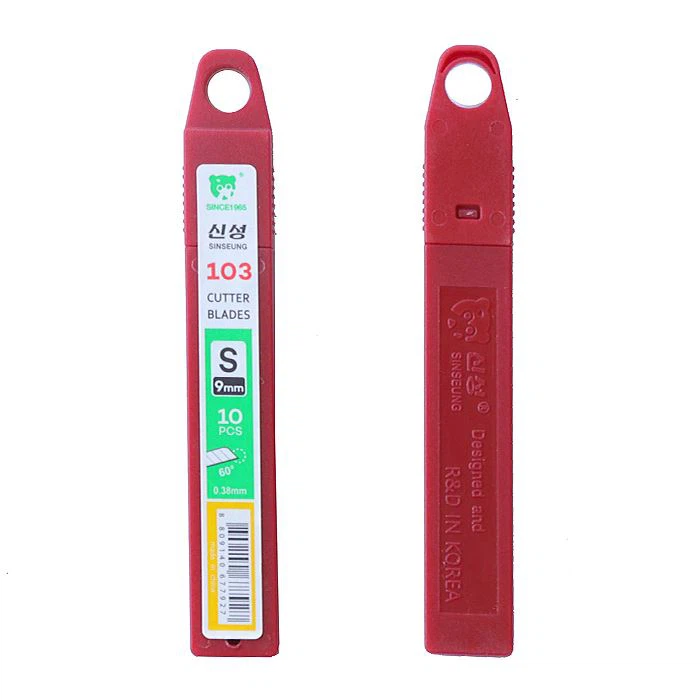
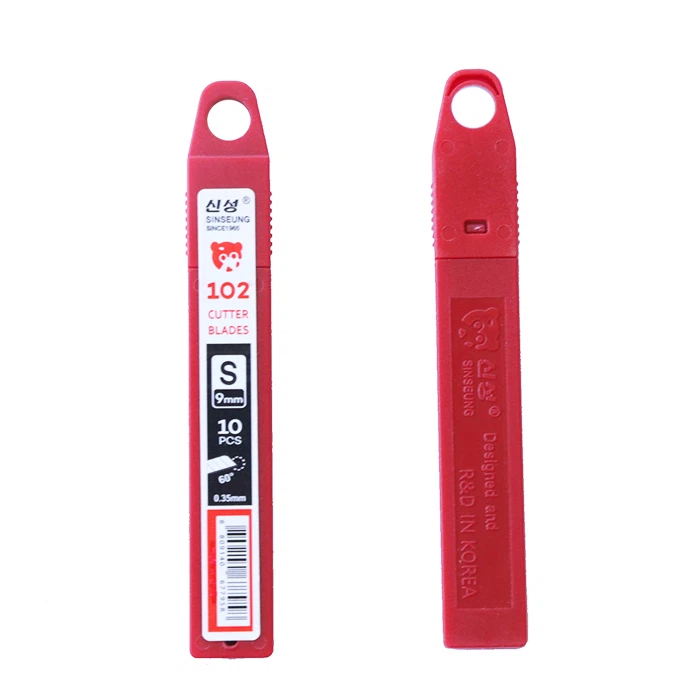
The material of the blade plays a crucial role in its performance in high - humidity environments. Blades made from high - quality stainless steel or other corrosion - resistant alloys are more likely to withstand the effects of moisture. These materials have a higher resistance to rust and corrosion, ensuring that the blade maintains its cutting performance for a longer period. For example, our Snap off Blades 9MM are crafted from premium stainless steel, which provides excellent corrosion resistance in high - humidity conditions.
2. Coating Technology
Advanced coating technologies can also enhance the performance of 9mm snap off blades in high - humidity environments. Coatings such as titanium nitride (TiN) or diamond - like carbon (DLC) can provide a protective layer on the blade surface, reducing the contact between the blade and moisture. This protective layer not only prevents corrosion but also improves the blade's hardness and wear resistance, resulting in a longer lifespan and better cutting performance. Our Cutter Snap Off Blade features a high - quality coating that offers superior protection against moisture and wear.
3. Storage and Maintenance
Proper storage and maintenance are essential for ensuring the optimal performance of 9mm snap off blades in high - humidity environments. Blades should be stored in a dry place, preferably in a sealed container with a desiccant to absorb any moisture. Regular cleaning and inspection of the blades can also help to identify and address any signs of corrosion or wear early on. After use, the blades should be wiped clean and dried thoroughly to remove any moisture or debris.
Applications in High - Humidity Environments
Despite the challenges, 9mm snap off blades have a wide range of applications in high - humidity environments.
1. Marine and Coastal Industries
In the marine and coastal industries, where high humidity is a constant factor, 9mm snap off blades are used for various tasks such as cutting ropes, cables, and insulation materials. Our PPF Snap Off Blade is particularly suitable for these applications, as it offers excellent cutting performance and corrosion resistance in the harsh marine environment.
2. Food Processing and Pharmaceutical Industries
High - humidity environments are common in food processing and pharmaceutical industries due to the presence of water in the production processes. 9mm snap off blades are used for cutting packaging materials, labels, and other components. The blades need to maintain their cleanliness and cutting performance in these environments to ensure product quality and safety.
3. Greenhouses and Agricultural Settings
Greenhouses and agricultural settings often have high humidity levels to create a suitable environment for plant growth. 9mm snap off blades are used for tasks such as trimming plants, cutting twine, and opening bags of fertilizers. The blades need to be able to withstand the moist conditions without losing their cutting ability.
Conclusion
In conclusion, while high - humidity environments pose challenges to the performance of 9mm snap off blades, with the right material selection, coating technology, and proper storage and maintenance, these blades can still deliver excellent results. As a supplier of 9mm snap off blades, we are committed to providing high - quality products that are designed to meet the demands of various applications, including those in high - humidity conditions.
If you are interested in learning more about our 9mm snap off blades or have any questions regarding their performance in high - humidity environments, please feel free to contact us for a detailed discussion. We look forward to assisting you in finding the right cutting solution for your needs.
References
- "Handbook of Cutting Tool Technology", CRC Press
- "Materials Science and Engineering: An Introduction", John Wiley & Sons
- Industry reports on cutting tool performance in high - humidity environments.