

Hey there! As a supplier of standard duty blades, I often get asked about how much these blades cost. Well, the price of standard duty blades can vary quite a bit, and in this blog, I'm gonna break down the factors that influence their cost and give you a general idea of what you might expect to pay.
Factors Affecting the Cost of Standard Duty Blades
Blade Material
One of the biggest factors that determine the price of standard duty blades is the material they're made from. Different materials have different properties, and some are more expensive to produce than others.
- High - Carbon Steel: This is a common material for standard duty blades. High - carbon steel blades are relatively affordable because the raw material is widely available and the manufacturing process is well - established. These blades offer a good balance between sharpness and durability, making them suitable for a variety of general - purpose cutting tasks. However, they may be more prone to rust compared to some other materials.
- Stainless Steel: Stainless steel blades are more expensive than high - carbon steel ones. The reason is that stainless steel contains alloying elements like chromium, which gives it corrosion - resistant properties. If you're working in a moist or corrosive environment, stainless steel blades are a great choice as they'll last longer and maintain their cutting performance. For example, in food processing or marine applications, stainless steel Snap off Blades 9MM are often preferred.
- Carbide - Tipped: Carbide - tipped blades are at the higher end of the price spectrum. Carbide is an extremely hard material, and when it's used to tip the blade, it significantly increases the blade's cutting edge life. These blades are ideal for cutting hard materials like ceramics, fiberglass, or thick plastics. But the cost of carbide and the manufacturing process to attach it to the blade make them pricier.
Blade Size and Shape
The size and shape of the standard duty blade also play a role in its cost.

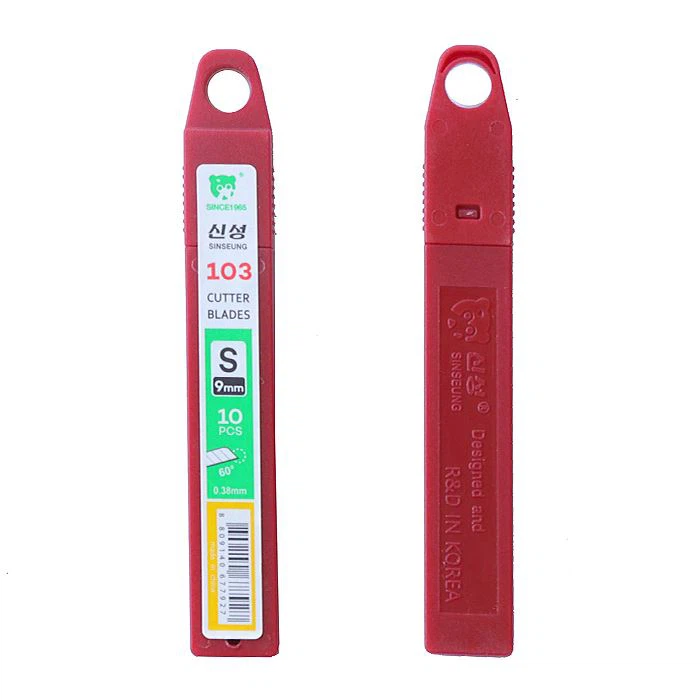
- Size: Larger blades generally cost more than smaller ones. This is because they require more raw material and may be more complex to manufacture. For instance, a 9mm blade might be cheaper than a 12mm blade of the same quality and material. The larger blade has more surface area and may need more precise manufacturing to ensure consistent cutting performance across the entire edge.
- Shape: Special - shaped blades, such as those with a curved or serrated edge, are usually more expensive. These non - standard shapes are designed for specific cutting tasks. A Cutter Snap Off Blade with a serrated edge, for example, is great for cutting through materials like cardboard or fabric, but the process of creating the serrations adds to the manufacturing cost.
Brand and Quality
Just like with any product, the brand and quality of standard duty blades can have a big impact on the price.
- Brand Reputation: Well - known brands often charge a premium for their blades. They've built a reputation for quality and reliability over time, and customers are willing to pay more for the peace of mind that comes with buying from a trusted brand. These brands usually invest more in research and development, which results in better - performing blades.
- Quality Control: High - quality blades go through strict quality control processes. This includes testing for sharpness, durability, and dimensional accuracy. Blades that meet higher quality standards are more likely to perform well and last longer, but the cost of quality control adds to the overall price.
Price Range of Standard Duty Blades
On average, you can find basic high - carbon steel standard duty blades for as little as a few cents per blade if you're buying in bulk. For example, a pack of 100 high - carbon steel Wallpaper Snap Off Blade might cost around $10 - $20, which works out to about 10 - 20 cents per blade.
Mid - range stainless steel blades usually cost between $0.20 and $0.50 per blade. These are great for applications where corrosion resistance is important but you don't need the extreme durability of carbide - tipped blades.
Carbide - tipped blades are the most expensive, with prices ranging from $1 to $5 per blade or even more, depending on the size and specific application. These are typically used in industrial settings where the cost - effectiveness of a long - lasting blade justifies the higher upfront cost.
Buying in Bulk vs. Small Quantities
If you're a professional who uses a lot of standard duty blades, buying in bulk can save you a significant amount of money. Suppliers often offer volume discounts, so the more blades you buy, the lower the per - blade cost. For example, a single high - carbon steel blade might cost 25 cents, but if you buy a pack of 1000, the per - blade cost could drop to 15 cents.
On the other hand, if you only need a few blades for occasional use, buying in small quantities might be more practical. You won't have to worry about storing a large number of blades, and you can get the blades you need right away without having to commit to a large purchase.
Conclusion
So, as you can see, the cost of standard duty blades depends on several factors, including the material, size, shape, brand, and quality. Whether you're looking for an affordable option for general - purpose cutting or a high - performance blade for a specific industrial application, there's a standard duty blade out there for you.
If you're interested in purchasing standard duty blades, I'd love to have a chat with you about your specific needs. We can discuss the best blade options for your application and find a pricing structure that works for you. Feel free to reach out, and let's start a conversation about getting the right blades for your projects.
References
- Industry reports on cutting tool materials and manufacturing costs
- Product catalogs from leading blade manufacturers