

Hey there, fellow garden enthusiasts! As a supplier of practical fence shears, I often get asked about the amount of force needed to operate these handy tools. It's a crucial question, especially for those who are new to gardening or looking to upgrade their current equipment. So, let's dive right in and explore this topic in detail.
First off, it's important to understand that the force required to operate fence shears can vary depending on several factors. The type of material you're cutting through is a major determinant. For instance, cutting through soft, young branches will obviously require less force compared to trimming thick, mature wood. If you're dealing with overgrown hedges or fences made of tough materials like bamboo or thick shrubs, you'll need to exert more muscle power.

Another factor is the design and quality of the fence shears themselves. High - quality shears are usually designed with sharp blades and efficient leverage systems. Sharp blades can cut through materials more easily, reducing the amount of force you need to apply. A good leverage system allows you to multiply the force you exert with your hands. For example, some fence shears have long handles that give you more leverage, similar to how a long - handled wrench makes it easier to turn a bolt.
Let's talk about the different types of practical fence shears and how they affect the force needed. There are manual and powered fence shears. Manual fence shears are the traditional type that you operate with your own strength. They come in various sizes and blade designs. Smaller manual shears are great for light pruning and trimming small branches. They typically require less force to operate because the blades are shorter and the cutting area is smaller.
On the other hand, larger manual fence shears with longer blades are designed for more heavy - duty tasks. While they can cover more ground with each cut, they also require more force. However, if you choose a pair with a well - designed handle and blade mechanism, you can still manage the task without getting too tired.
Powered fence shears, such as electric or gas - powered ones, take a lot of the physical strain off your hands. Electric shears are usually lighter and more suitable for small to medium - sized gardens. They use an electric motor to power the blades, so you don't have to worry about applying a large amount of force. Gas - powered shears, on the other hand, are more powerful and are better suited for larger areas and tougher materials. They can cut through thick branches with ease, but they do require some physical effort to hold and maneuver.
Now, let's get a bit more technical about the force calculation. The force needed to cut through a material can be estimated using the principle of mechanical advantage. The mechanical advantage of a pair of shears is the ratio of the output force (the force exerted by the blades on the material) to the input force (the force you apply with your hands). If a pair of shears has a high mechanical advantage, it means you can apply a relatively small input force to get a large output force.
For example, if a pair of shears has a mechanical advantage of 5, and you need to exert a force of 10 Newtons on the handles, the blades will exert a force of 50 Newtons on the material. However, calculating the exact mechanical advantage of a pair of shears can be quite complex as it depends on the shape of the blades, the length of the handles, and the pivot point.
In a real - world scenario, you can test the force required for your fence shears by trying them out on different materials. Start with some soft branches and gradually move on to thicker ones. Pay attention to how much effort you need to put in to make a clean cut. If you find that you're struggling too much, it might be time to consider upgrading your shears or using a powered option.
As a supplier, I've seen firsthand how the right pair of fence shears can make a huge difference in your gardening experience. That's why we also offer a range of other useful garden tools. Check out our Dual Headed Weeding Tool, which is great for removing weeds from your garden beds. It's designed to be easy to use and can save you a lot of time and effort.
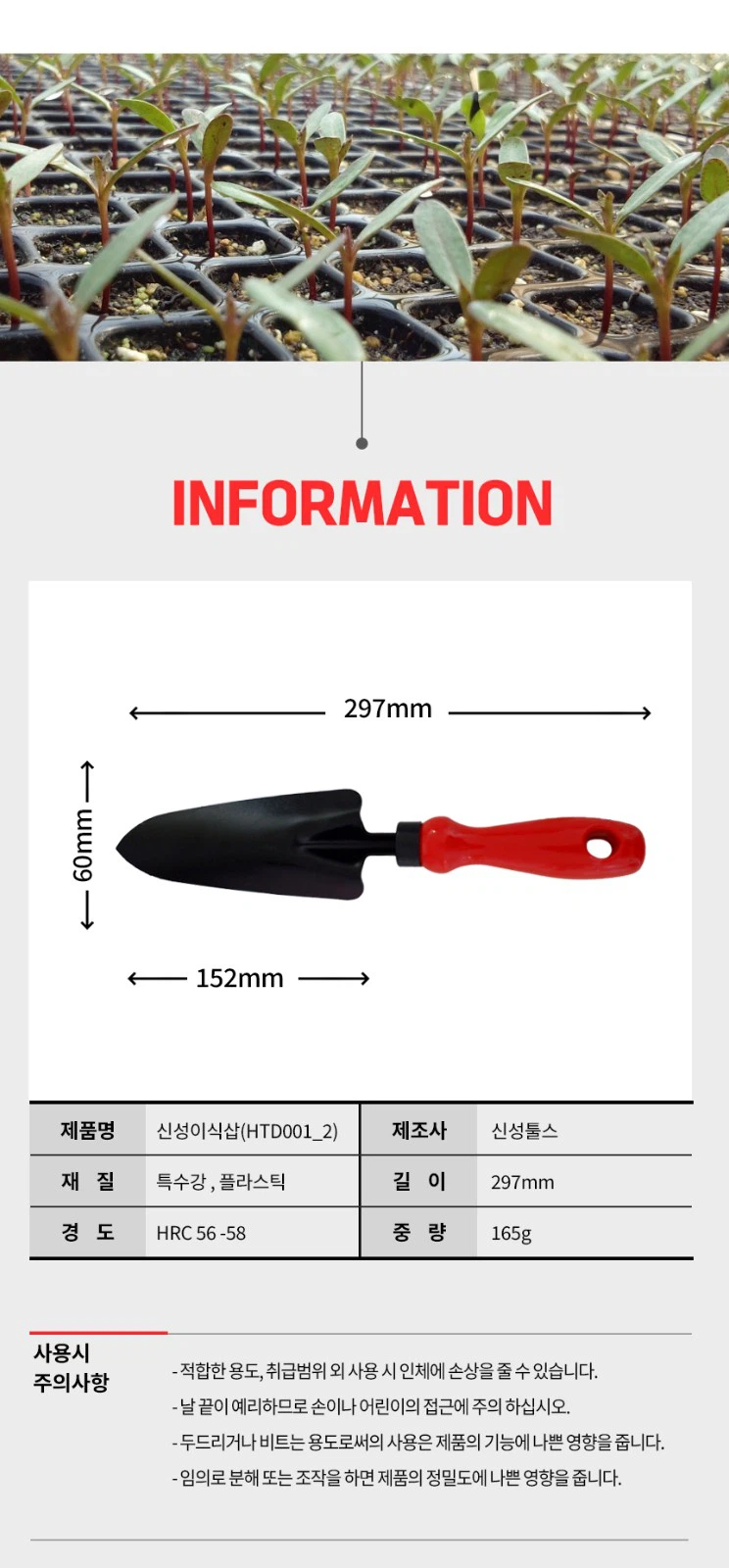
Our Gardening Hand Shovel is another essential tool for any gardener. It's perfect for digging small holes, transplanting seedlings, and turning over soil. And if you need a more heavy - duty tool for digging and moving larger amounts of soil, our Garden Spade is a great choice.
If you're in the market for practical fence shears or any of our other garden tools, we'd love to hear from you. Whether you're a professional gardener or just someone who enjoys a bit of gardening in their free time, we have the right tools for you. Contact us to start a conversation about your needs, and we'll work with you to find the best solutions for your garden.
In conclusion, the amount of force needed to operate practical fence shears depends on multiple factors, including the material being cut, the type of shears, and their design. By understanding these factors, you can choose the right shears for your gardening tasks and make your gardening experience more enjoyable and efficient.
References
- "The Science of Gardening Tools" by Gardening Science Press
- "Handbook of Garden Equipment Mechanics" by ToolTech Publishing