

Hey there! As a supplier of snap off graphics blades, I've dealt with all sorts of questions about these handy tools. One of the most common queries I get is, "What is the best way to snap off a dull section of the blade?" Well, I'm here to break it down for you in a simple and easy - to - understand way.
First off, let's talk about why you'd want to snap off a dull section in the first place. When you're using a snap off blade for tasks like cutting through paper, cardboard, leather, or even thin plastics, the blade gets dull over time. A dull blade makes your cutting job more difficult, and the cuts you make are often less clean. By snapping off the dull part, you expose a fresh, sharp edge, and you're back to making smooth, precise cuts.
Now, onto the best way to snap off that dull section. The first thing you need to do is make sure you're using a good - quality snap off blade. We offer a range of top - notch snap off blades, like the Snap off Blades SK2, which are designed for various artistic and cutting applications. These blades are made with high - quality materials that ensure they're durable and can be snapped off easily.
Before you start the snapping process, take a close look at the blade. Most snap off blades have pre - scored sections. These scores are like weak points on the blade, which are specifically designed to break cleanly when you apply the right amount of force. It's important to identify which pre - scored section is right at the end of the dull part of the blade.
Once you've located the correct pre - scored section, you need to hold the blade properly. The blade is usually housed in a handle, and you should firmly grip the handle. Make sure your hand is steady. You don't want to accidentally apply too much pressure in the wrong direction and damage the blade or the handle.

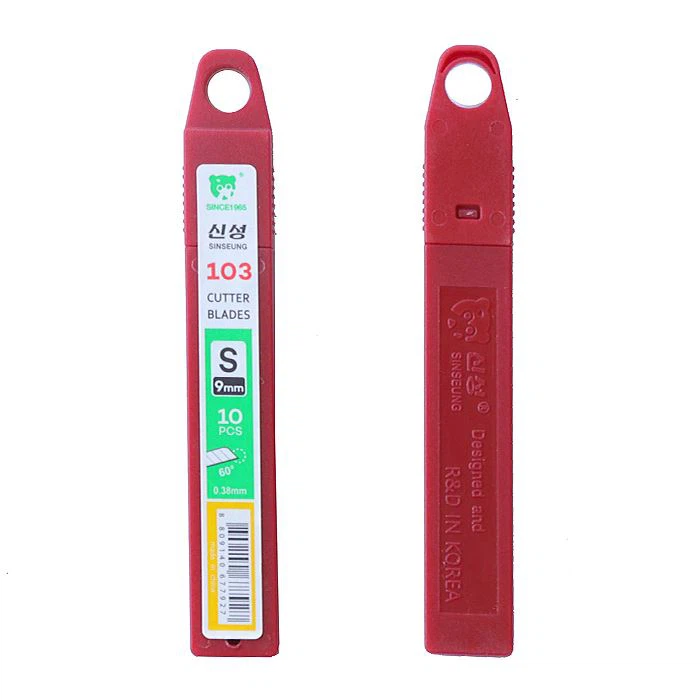
Now, here comes the actual snapping part. There are a couple of different techniques, but one of the most effective ones is the "bending" method. You want to bend the blade slightly at the pre - scored section. To do this, you can use a flat surface, like a tabletop. Place the blade on the edge of the table so that the pre - scored section lines up with the edge. Then, while holding the handle firmly, use your other hand to gently press down on the part of the blade that extends past the table. Apply pressure slowly and steadily. You'll feel the blade start to give way at the pre - scored section. With a little more pressure, the dull section will snap off cleanly.
Another method is to use the built - in snapping mechanism on some blade handles. Some handles are designed with a special feature that allows you to snap off the blade without using an external surface. You just need to follow the instructions that come with the handle. Usually, it involves pushing or pulling a lever or a button on the handle, which applies the right amount of force to break the blade at the pre - scored section.
It's also important to note that safety should be your top priority. When you snap off the dull section, the blade can fly off, so make sure you're in a clear area. You don't want to accidentally hit someone or damage something. Also, always use gloves when handling the blade, especially when you're about to snap it off. The sharp edges can cut your fingers easily.
If you're working on a project that requires a lot of cutting, like leatherworking, our Leather Snap Blades are a great choice. They're specifically designed to cut through leather smoothly, and they can be snapped off just as easily as the other blades we offer.
Now, let's talk about some common mistakes people make when trying to snap off a dull section of the blade. One of the biggest mistakes is using too much force. You don't need to yank or pull the blade hard. Remember, the pre - scored sections are there to make the snapping process easy. Applying too much force can cause the blade to break in an uneven way, or it can even damage the handle.
Another mistake is not lining up the pre - scored section correctly. If you try to snap the blade at the wrong place, it won't break cleanly. You might end up with a jagged edge, which is not only difficult to work with but can also be dangerous.
If you're still having trouble, don't worry. Our customer support team is always here to help. We've got years of experience dealing with snap off blades, and we can answer any questions you might have.
We also offer Snap off Blades 9MM, which are great for general - purpose cutting tasks. These blades are widely used in offices, workshops, and homes. They're reliable and easy to use, and snapping off the dull sections is a breeze.
In conclusion, the best way to snap off a dull section of the blade involves identifying the pre - scored section, holding the blade properly, and applying the right amount of force. Whether you choose the bending method or use the built - in snapping mechanism on the handle, make sure you do it safely.
If you're in the market for high - quality snap off blades, we're the supplier for you. We've got a wide range of blades to suit all your cutting needs. Whether you're an artist, a leatherworker, or just someone who needs a good blade for occasional cutting tasks, we've got you covered.
If you're interested in purchasing our snap off blades or have any questions about our products, feel free to reach out to us. We'd love to have a chat with you and help you find the perfect blade for your project. Start a conversation with us, and let's get you the best snap off blades on the market.
References
- General knowledge on snap off blade usage and maintenance from years of experience in the industry.