

Hey there! As a supplier of cutter snap off blades, I've been getting a lot of questions lately about what edge retention really means when it comes to these blades. So, I thought I'd take the time to break it down for you all.
First things first, let's talk about what a cutter snap off blade is. These blades are super handy tools. They're usually used in snap - blade knives, which are common in various industries like construction, wallpaper installation, and general DIY projects. The great thing about them is that they have multiple cutting edges. When one edge gets dull, you can simply snap it off to reveal a fresh, sharp edge.
Now, edge retention. Edge retention refers to how long a blade can maintain its sharpness during use. In the case of cutter snap off blades, it's all about how many cuts you can make before the edge becomes too dull to do the job effectively. A blade with good edge retention will stay sharp through a large number of cuts, which is obviously a huge advantage.
Why is edge retention so important? Well, think about it from a user's perspective. If you're working on a big project, like installing Wallpaper Snap Off Blade across an entire room, you don't want to be constantly snapping off edges because the blade has gone dull. It's time - consuming and can be a real pain in the neck. With a blade that has excellent edge retention, you can focus on the task at hand without worrying about frequent blade changes.
There are several factors that affect the edge retention of cutter snap off blades. One of the most important ones is the material the blade is made from. High - quality steel alloys are often used in the manufacturing of these blades. For example, some blades are made from carbon steel, which can hold a sharp edge well but may be prone to rust if not properly cared for. On the other hand, stainless steel blades are more resistant to corrosion but might not have quite the same level of edge retention as carbon steel in some cases.
The heat treatment process also plays a crucial role. A well - executed heat treatment can harden the steel, making it more resistant to wear and tear. This means the blade can withstand the friction and pressure of cutting without losing its sharpness too quickly.
Another factor is the design of the blade. The shape of the cutting edge can impact how well it retains its sharpness. A blade with a thinner, more precise edge might cut more cleanly but could also dull faster compared to a blade with a slightly thicker, more robust edge.
As a supplier, I've seen firsthand the difference that good edge retention can make. Customers who use our Cutter Snap Off Blade often come back to us because they've noticed that our blades last longer and perform better than others on the market. We've put a lot of effort into researching and developing the right combination of materials, heat treatment, and blade design to ensure optimal edge retention.
Let's take a look at some real - world scenarios. In the construction industry, workers use cutter snap off blades to cut through various materials like drywall, insulation, and plastic sheeting. A blade with poor edge retention would quickly become dull when cutting through these tough materials, leading to ragged cuts and a lot of frustration. But with a blade that has good edge retention, workers can make clean, precise cuts throughout the day, increasing their productivity.
For DIY enthusiasts, edge retention is also key. Whether you're doing a simple home improvement project or a more complex woodworking task, having a sharp blade that lasts is essential. You don't want to be constantly running to the store to buy Replacement Blades For Snap - blade Knives because your current one has gone dull after just a few cuts.
So, how can you tell if a cutter snap off blade has good edge retention? Well, one way is to look at customer reviews. Real - world experiences from other users can give you a good idea of how well a blade holds up over time. You can also ask for samples from suppliers. Many suppliers, including us, are happy to provide samples so you can test the blades for yourself.
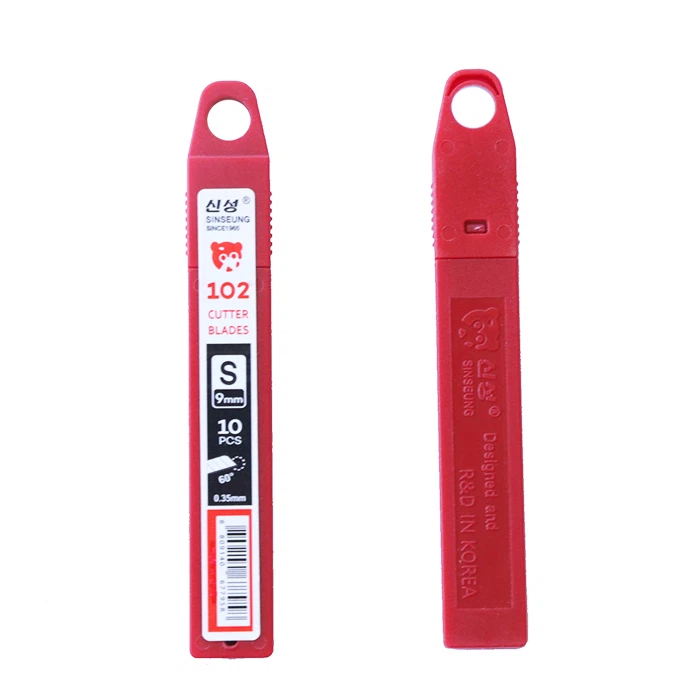

When you're testing a blade, pay attention to how easily it cuts through the material. A sharp blade should glide through with minimal resistance. Also, notice if the cuts are clean and precise. If the blade starts to tear or snag the material, it might be losing its edge.
In addition to choosing a blade with good edge retention, proper maintenance is also important. Keeping the blade clean and dry can help prevent corrosion and premature dulling. After use, it's a good idea to wipe the blade with a clean, dry cloth and store it in a dry place.
As a supplier, we're always looking for ways to improve the edge retention of our cutter snap off blades. We're constantly researching new materials and manufacturing techniques to make our blades even better. We believe that by providing high - quality blades with excellent edge retention, we can help our customers get the job done faster and more efficiently.
If you're in the market for cutter snap off blades, whether you're a professional tradesperson or a DIYer, I encourage you to reach out to us. We'd love to have a chat with you about your specific needs and how our blades can meet them. We offer a wide range of cutter snap off blades, all designed with edge retention in mind. So, don't hesitate to contact us for more information or to start a procurement discussion.
References
- Industry research on cutting tool materials and performance
- Internal product testing data on cutter snap off blades