

The weight of an art snap off blade might seem like a trivial detail at first glance, but it plays a crucial role in the performance and user experience of these essential tools. As a supplier of art snap off blades, I've encountered numerous inquiries regarding this aspect, and I'm excited to share some insights on this topic.
Understanding Art Snap Off Blades
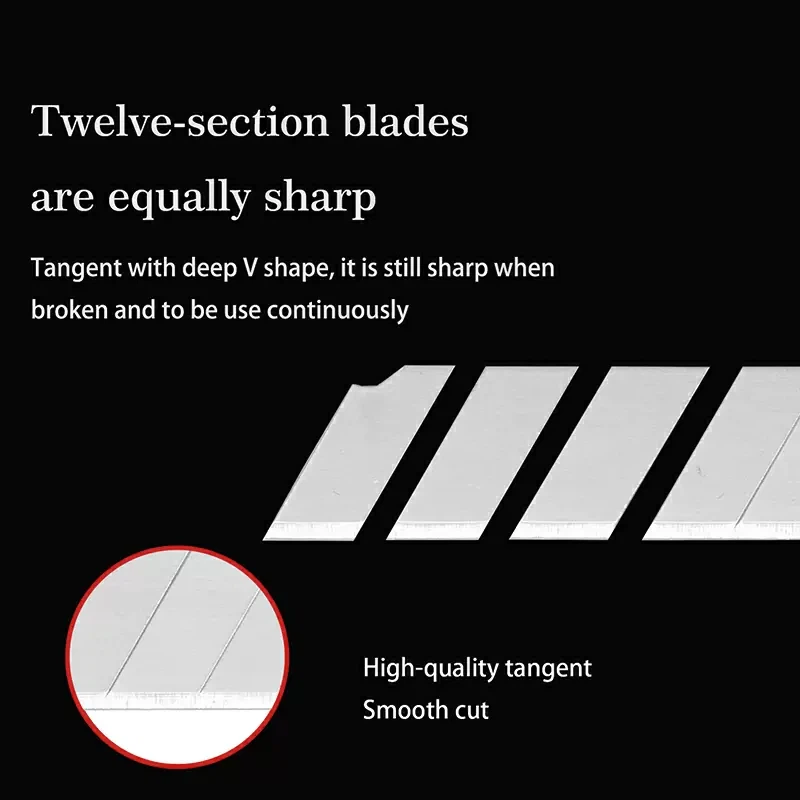
Art snap off blades are specialized cutting tools commonly used in various creative and professional applications. They are designed with a segmented blade that can be snapped off at pre - scored lines to expose a fresh, sharp edge when the current one becomes dull. These blades are used in fields such as graphic design, paper crafts, leatherworking, and wallpaper installation.

Factors Affecting the Weight of Art Snap Off Blades
Material Composition
The primary factor influencing the weight of an art snap off blade is the material from which it is made. Most snap off blades are crafted from high - carbon steel or carbide. High - carbon steel blades are relatively common due to their balance of cost, durability, and sharpness. They are heavier than some other materials because of the density of steel. Carbide blades, on the other hand, are extremely hard and wear - resistant. Although carbide is a dense material, the blades are often thinner and more precisely engineered, which can result in a lower overall weight compared to equivalently sized high - carbon steel blades.
Blade Size
The size of the art snap off blade also has a significant impact on its weight. Larger blades naturally weigh more than smaller ones. For example, a 9mm snap off blade will generally be heavier than a 6mm one. The length, width, and thickness of the blade all contribute to its mass. A thicker blade will provide more durability but will also add to the weight. In applications where precision and fine control are required, a lighter, thinner blade might be preferred, while in heavy - duty cutting tasks, a larger, heavier blade can withstand more pressure.
Additional Features
Some art snap off blades come with additional features that can affect their weight. For instance, blades with a coated surface for enhanced corrosion resistance or reduced friction might have a slightly higher weight due to the added layer of coating material. Blades with a built - in safety mechanism, such as a retractable tip, may also be heavier because of the extra components required for the mechanism.
Typical Weight Ranges
To give you a better idea of the weight of art snap off blades, let's look at some typical ranges. A standard 9mm high - carbon steel art snap off blade usually weighs between 5 to 10 grams. This weight range allows for a good balance between durability and ease of use. The relatively light weight makes it comfortable to hold for extended periods, while the strength of the steel ensures it can handle a variety of cutting tasks.
Carbide 9mm snap off blades, due to their thinner construction, typically weigh around 3 to 7 grams. Their lower weight makes them ideal for applications where delicate cutting and precise control are essential, such as in fine art and detailed paper crafts.
Importance of Weight in Different Applications
Leatherworking
In leatherworking, the weight of the snap off blade can significantly impact the quality of the cuts. A heavier blade can provide more force when cutting through thick leather, making it easier to achieve clean, straight cuts. However, it also requires more control. Leather Snap Blades are often designed to have an optimal weight that allows for both power and precision. A blade that is too light may not be able to cut through the leather effectively, while one that is too heavy can be difficult to maneuver, leading to uneven cuts.
Wallpaper Installation
When installing wallpaper, a lighter snap off blade is often preferred. The task requires a high level of precision to cut the wallpaper accurately around corners, edges, and outlets. Wallpaper Snap Off Blade with a lower weight allows installers to make quick, delicate cuts without applying excessive pressure. This reduces the risk of damaging the wallpaper or the underlying surface.
Graphic Design and Paper Crafts
In graphic design and paper crafts, the weight of the blade affects the user's ability to create detailed and intricate cuts. A light - weight blade gives the artist more control over the cutting process, enabling them to make precise curves and fine details. Snap Off Replacement Blades are commonly used in these fields, and their weight is carefully calibrated to meet the needs of creative professionals.
How We Ensure Quality and Optimal Weight
As a supplier of art snap off blades, we understand the importance of providing products with the right weight for different applications. We work closely with our manufacturing partners to ensure that each blade is made from high - quality materials and is precisely engineered. Our quality control team conducts thorough inspections to measure the weight of the blades and ensure they fall within the specified ranges.
We also offer a wide range of blade options to meet the diverse needs of our customers. Whether you need a heavy - duty blade for industrial applications or a light - weight blade for delicate crafts, we have the right product for you.
Conclusion
The weight of an art snap off blade is a critical factor that affects its performance and usability in various applications. By understanding the factors that influence the weight, such as material composition, blade size, and additional features, users can make more informed decisions when choosing the right blade for their needs.
If you are in the market for high - quality art snap off blades, we invite you to contact us for more information. We are dedicated to providing our customers with the best products and services. Whether you are a professional artist, a craftsman, or a DIY enthusiast, we have the perfect snap off blade solution for you. Reach out to us to start a discussion about your specific requirements and let's find the ideal blades for your projects.
References
- Engineering Handbook of Cutting Tools, 2nd Edition
- Journal of Materials Science in Tool Manufacturing
- Professional Craftsman's Guide to Cutting Tools